Equipment resources
Preparing equipment available for inquiry
Checking brands, models, images and applications to keep product browsing and inquiries clear.
Laboratory instrumentsSemiconductor equipmentModel search
Equipment resources
Checking brands, models, images and applications to keep product browsing and inquiries clear.
Equipment details
Preparing product images, specifications, applications and related equipment to help you verify the model.
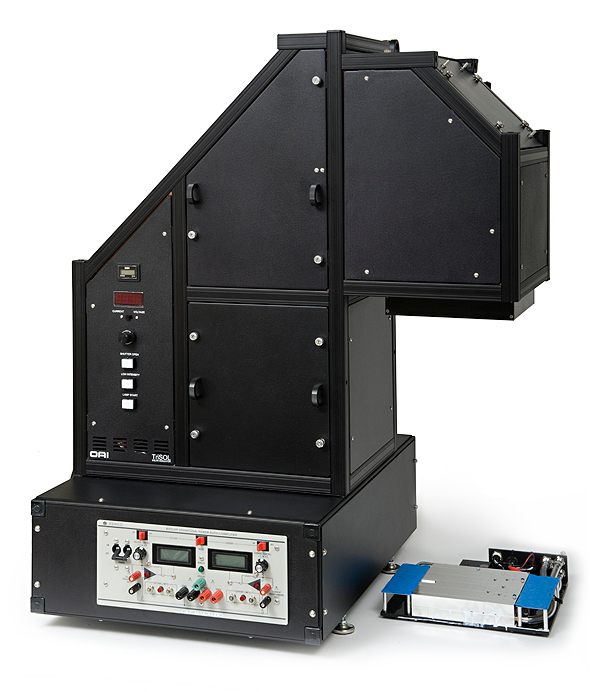
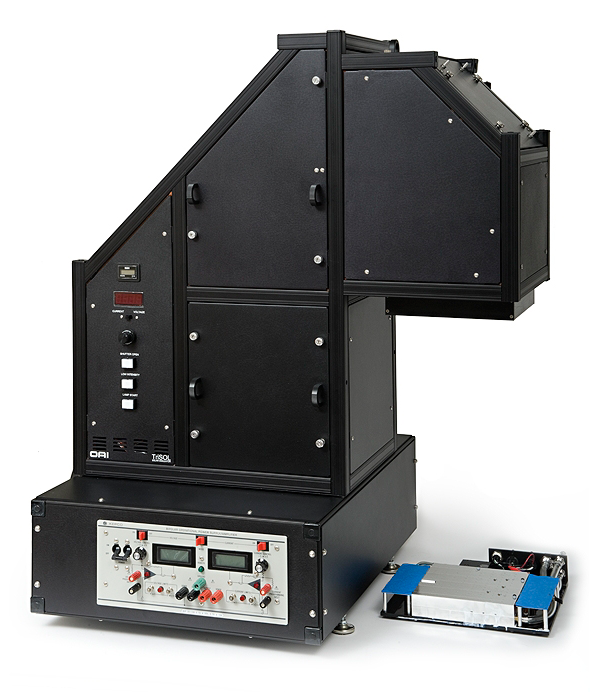
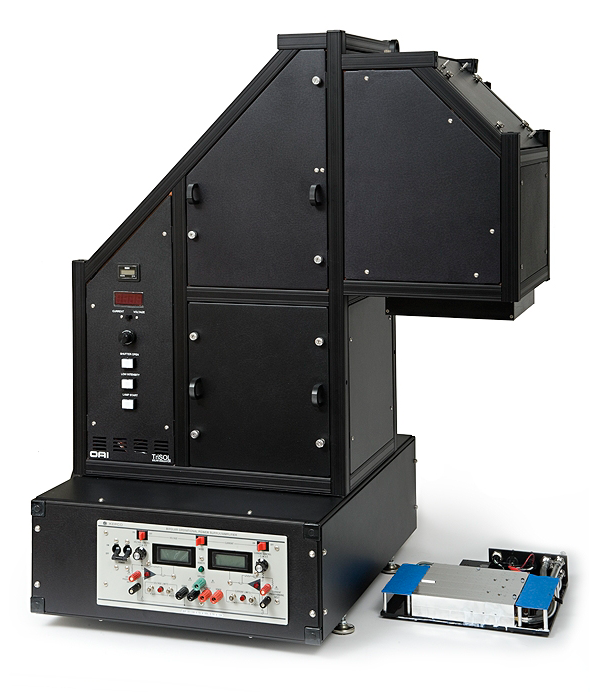
Trisol™ Single Long Pulse Solar Simulator (SLPSS) & I-V Test System
The OAI Test System for HIGH EFFICIENCY SOLAR CELLS overcomes the limitations of flash testing by providing a highly optimized pulse width and voltage sweep rate to match the cell’s dielectric response speed. As a result, the system produces extremely accurate measurements of solar cell efficiency leading to increased profitability.
Keqiao Lab provides model lookup, selection, quotation, procurement, installation, training, and service coordination support for OAI Trisol™ Single Long Pulse Solar Simulator (SLPSS) & I-V Test System. Pricing is by inquiry.

Scan WeChat QR
Scan to add our technical consultant and share your requirement.
The OAI Test System for HIGH EFFICIENCY SOLAR CELLS overcomes the limitations of flash testing by providing a highly optimized pulse width and voltage sweep rate to match the cell’s dielectric response speed. As a result, the system produces extremely accurate measurements of solar cell efficiency leading to increased profitability.
Advances in mono-crystalline Si, multi-crystalline Si, HIT, and backside-contact type based solar cell design and processing have led to an increase in cell capacitance and resistance by >2 orders of magnitude. This results in a decrease in the cell’s dielectric response speed. Most flash testers provide an extremely short pulse duration, in the range of 5 -50ms, and require fast voltage sweep rates. Testing solar cells with flash testers produce I-V curve hysteresis when sweeping in both forward and reverse directions, resulting in inconsistent fill-factor (FF) values and lower cell efficiency measurements.
Share your use case and we will provide selection recommendations.