Equipment resources
Preparing equipment available for inquiry
Checking brands, models, images and applications to keep product browsing and inquiries clear.
Laboratory instrumentsSemiconductor equipmentModel search

Equipment resources
Checking brands, models, images and applications to keep product browsing and inquiries clear.
Equipment details
Preparing product images, specifications, applications and related equipment to help you verify the model.
chemisorb htp
adopts an in-situ sample activation procedure, and each reactor has an independent temperature and flow control system
Keqiao Lab provides model lookup, selection, quotation, procurement, installation, training, and service coordination support for Micromeritics chemisorb htp. Pricing is by inquiry.

Scan WeChat QR
Scan to add our technical consultant and share your requirement.
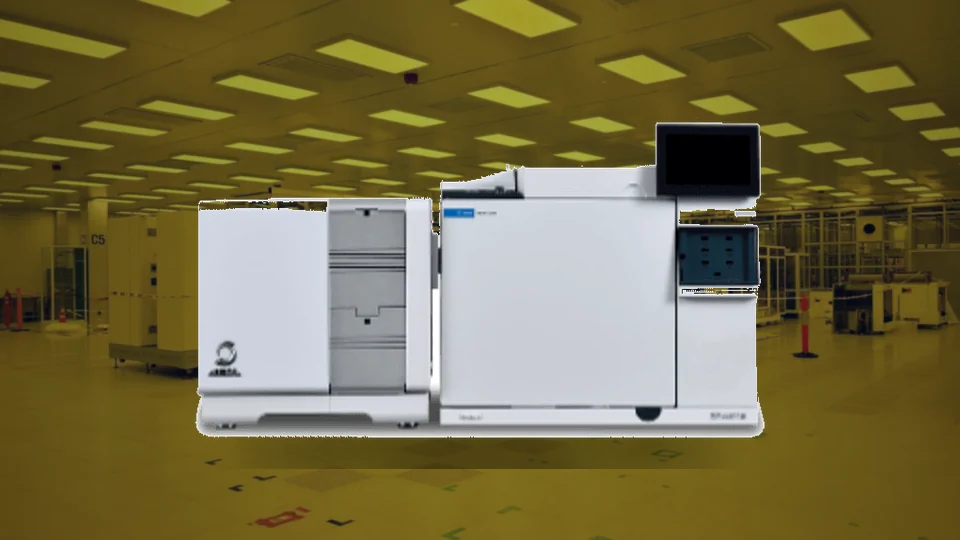
ChemiSorb HTP Multi-station static volumetric chemical adsorption instrument
multi-station static volumetric chemical adsorption instrument
Six independent chemical adsorption analysis stations
adopts an in-situ sample activation procedure, and each reactor has an independent temperature and flow control system
Its high-precision characteristics are suitable for R&D applications, and its high-throughput characteristics are suitable for quality control applications.
ChemiSorb HTP is a fully automatic, high-throughput chemisorption analyzer for characterizing catalysts, metal-supported nanoparticles and chemically active materials used in sensor applications. Six independent stations run analysis in parallel, reducing operator intervention and improving laboratory work efficiency.
ChemiSorb HTP is a static pressure chemical adsorption analyzer. Typically, two adsorption isotherms are collected below atmospheric pressure, describing gas adsorption versus pressure at constant temperature. The first represents total adsorption and the second reversible adsorption. Their difference represents irreversible adsorption, or chemisorption. This technology provides information on the number of adsorption sites, allowing calculation of percent metal dispersion, active metal surface area, active particle size, and surface acidity of the catalyst material.
Static chemisorption provides highly detailed surface characterization, enabling analysis of total, irreversible or strong, and reversible or weak chemisorption across a broad range of catalyst chemistries.
Six preparation/analysis ports enable high-throughput catalyst characterization.
The catalyst activation process is carried out in situ to avoid the risk of sample contamination before the experiment.
The catalyst activation process is completed in situ to avoid the risk of sample contamination before the experiment.
can perform multiple analyzes simultaneously or in parallel on one instrument, saving time and laboratory space for busy catalyst operations. Samples can be added or removed from each analysis station without disturbing other samples being prepared or analyzed. This instrument has long-term unattended analysis function and high-throughput mode, and users can start multiple parallel analyses.
Perform degassing/sample preparation at the analysis port immediately prior to analysis. This ensures that the preparation process is completely unaffected by the atmosphere. Each port has a dedicated furnace for independent sample temperature control, heating from 10° C above ambient to 700° C. Temperatures are recorded with each equilibrium pressure to provide the highest quality isotherms.
ChemiSorb HTP includes a complete software suite reporting key active-site parameters: metal dispersion percentage, active metal surface area, crystallite size of active particles and surface acidity of catalyst materials.
independent sample port maximizes versatility; each reactor is equipped with its own heating furnace, operating temperature range from room temperature to 700℃.
ChemiSorb HTP is equipped with six independent analysis stations, each with dedicated pressure sensors, mass flow controllers and temperature controls.
0 to 950 mmHg
0.001 mmHg, 1000?mmHg sensor; 0.00001 mmHg, 10?mmHg sensor.
Within 0.15% of reading for 1000 and 10 mmHg sensors, including nonlinearity, hysteresis and nonrepeatability, in accordance with sensor manufacturer specifications.
0.000375 mmHg to ?1 mmHg.
0.0001 mmHg (0.1 microns)
two stages, ultimate vacuum is less than 3 mmHg
Share your use case and we will provide selection recommendations.